Archive for February, 2010

What hath God wrought?

Thursday, February 18th, 2010

Since the advent of the telegraph in the early 19th century, business and technology have been striving to bring everything closer together.

Today this sentiment couldn’t be further from the truth. With all apps, social networking sites, and features, the way technology is going is starting to feel overwhelming.  The major developers have wholeheartedly embraced the integration of applications and other technologies in their products. Let’s take a look at two of the newest developments provided by Google and Microsoft.

The Newest Developments:

Google Buzz

On February 9th, 2010, Google unleashed Google Buzz, a social networking tool integrated into Google Mail. Users can post updates, pictures, and follow their contacts, similar to a Twitter-Flicker hybrid. Its features are nothing new to the social networking scene, but the fact that Google integrated Google Buzz into the hands of every person with a Gmail account is genius! With Gmail having 146 million users monthly, Google Buzz is ripe to use by all 146 million users without having to create a new account or sign up for anything.

I really like this fact, as it tends to take me a long time to jump on the bandwagon with newer social websites. I think this integration is a smart move that serves to simplify the previous need to maintain accounts on multiple sites. I also think that Twitter is in big trouble now. Their 6 million users simply cannot compete with a potential 146 million users.

Windows 7 Phone Series

On February 15th, 2010, Microsoft announced the Windows 7 Phone Series, which finds its selling point in its vast integration of Microsoft technologies. It incorporates its Zune HD music technology, an Xbox LIVE dashboard allowing users to access their LIVE accounts and play games downloaded from the Xbox Marketplace, pulls in contacts from all of a users email and social networking sites, has an Office suite, and features numerous “Hubs” that have been described as “apps that makes sense of your apps.” And this only scrapes the surface of what this phone will have to offer when released.

 It truly does sound amazing, and if done right will be able to effectively manage all of our email, social networking, and work related needs. I fear, however, that this new technology is going to have a steep learning curve. I am an individual that uses a mobile phone for the purpose of, well, talking to other people over the phone. I feel there are many people out there that feel the same way, and it will be up to Microsoft to show that anybody can use their new mobile, and that it will make our lives simpler. I may be behind the technological curve of the use of feature-packed, fully integrated, “computer-phones”, but the prospect of being able to manage so much technology with an easy-to-use device is compelling to me.

Where I Integrate

Technology these days is concerned with managing other technologies. If this is done effectively, I fully support it and think I can learn to embrace it. Microsoft and Google are making the right moves. With the thousands of apps being developed for every technological medium, it makes sense to develop a system that can help a regular Joe Shmoe like me bring them all under reigns. Even yet, I still miss the days when a phone was singularly used to call people. It may seem silly, but I feel the world was a simpler place before I knew about “apps” or “tweets”.

 As Samuel Morse said in his first telegram, “What hath God wrought?”

5 Tips for Avoiding Bad Business Advice Online

Tuesday, February 9th, 2010

5 Tips for Avoiding Bad Business Advice Online

I’ve been looking into articles and blogs recently which feature advice for SMB’s who want to stand out in the crowd. There’s no shortage of free advice on the web, and I’ve been indulging. 

On a particular blog I read (How Your Small Business can Easily Stand Out) the author posed to the readers what he considers the biggest challenge for small businesses.

“How do I distinguish myself from my competitors”?

This is a good question, as SMB’s are frequently looking for the most attractive selling point for their product. The author, Dov Gordon, says that the answer is simple, and that there is “no shortage of people toiling to make it complicated”.

Ironically, after analyzing his line of reasoning, I conclude that he himself is complicating the issue.

I am going to quickly spell out his argument and show you its inconsistencies.

    Premise 1: For your businesses to stand out, dedicate yourself to your customers.
    Premise 2: A business that dedicates itself to its customers cares more about helping them than about making money.
    Premise 3: A business that cares more will understand more.
    Premise 4: A business that understands the customer’s world will think up ideas that will impact their world.
    Premise 5: (missing)
    —————————————————-
    Conclusion: Your business stands out

This argument is fundamentally flawed for the following reason.

  • The argument is invalid because Gordon fails to provide Premise 5, which links the rest of the argument to the conclusion.  His argument is missing this vital link.
    Premise 5 should read: Thinking up ideas that impacts the customer’s world makes for your business to stand out.

At first you might think I’m being too harsh and nitpicky, but consider that perhaps the reason Gordon omitted Premise 5 is that it contradicts the first premise of his argument! Not only is this argument bad, but it’s confusing.

Like I said before, there’s no shortage of free advice on the web, but be careful, there is a lot of bad advice out there!

Here are some personal tips to help you make the most of the multitude of free business advice online.

TIP #1 – Good Advice for Someone Else Might be Bad for You

Every business has varied needs and capacities, and strategies that work great for one business won’t necessarily work great for yours.

TIP #2 – Always Consider the Source

This practice can save you from the snake oil salesmen’s wiles and save you time too. Always consider the website or company the author of an article is affiliated with. If the author links to a shady-looking site, they could be trying to scam you. Scammers will say anything they can to get you where they want!

TIP #3 – Don’t Believe Everything You Read

I’m sure many of us heard this adage as children, but it is good advice.  Never take anything you read (especially on the internet!) at face value. If an individual makes a claim without providing a source, be sure to do some research to make sure it isn’t unfounded information. Be wary, and be inquisitive.

TIP #4 – Good Advice is Free of Contradictions

If something labeled as “advice” is wrought with contradictions and you unknowingly accept it, you’re setting yourself up to be a confused individual. Good advice never contradicts itself. Keep an eye out.

TIP #5 – Good Advice Often Keeps Good Company

Once you’ve found a community, site, or blog that features good business advice, stick around. Intelligent people tend to draw close to like-minded individuals, so it’s likely there is more good advice to be found there, with less of the bad stuff.

Those are all the tips I’ve got for now, and I hope you can put them to good use. And remember, don’t believe everything you read!

Take payment at the time of appointment booking

Friday, February 5th, 2010

Have you thought about taking a deposit from your clients when they book an appointment? Are you seeing ‘no-shows’ and looking for ways to reduce it? Or do just want to feel more secure that the clients will show up at the scheduled time?  Requiring payments before confirming appointment may just be the right thing for you.

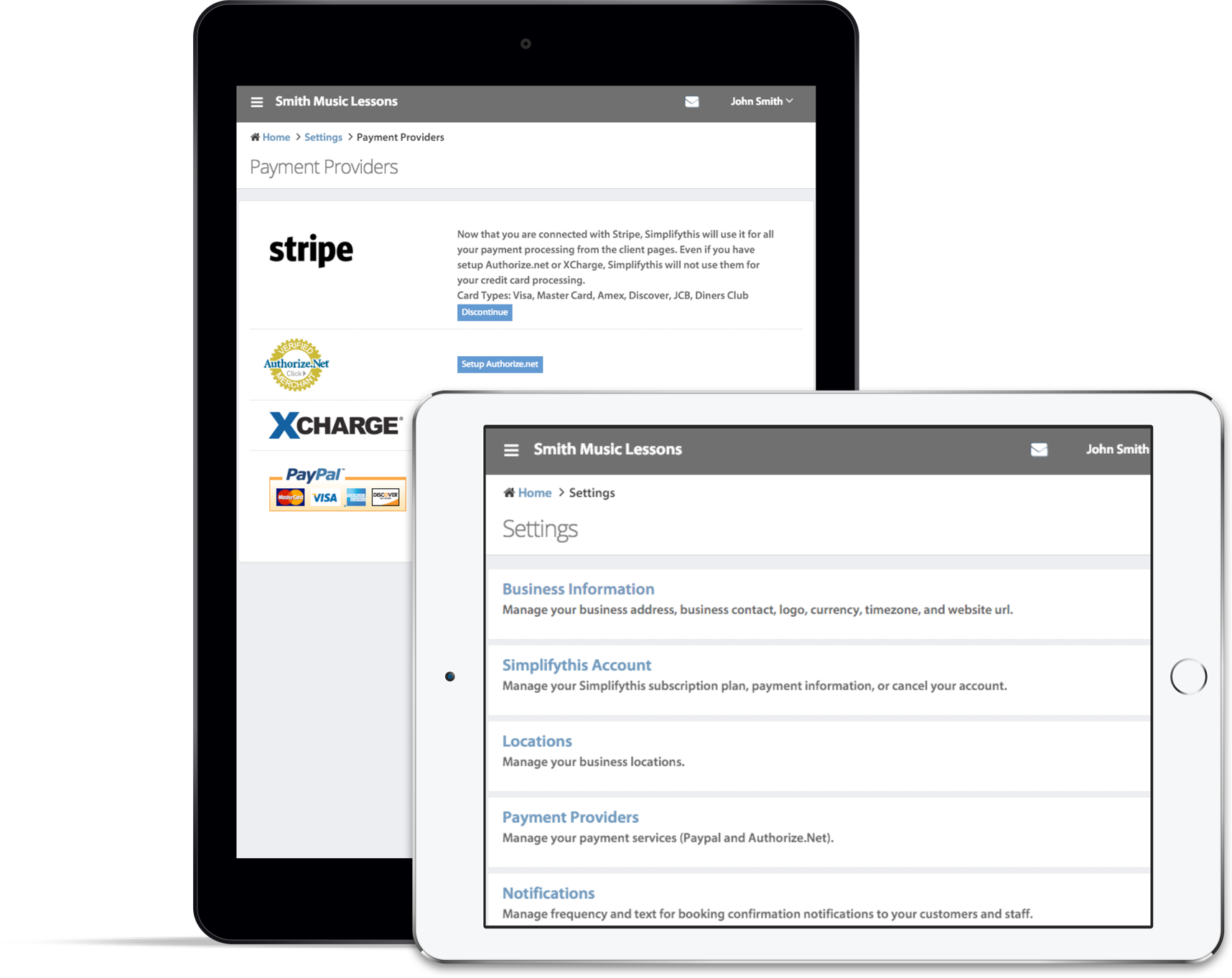
We have added this feature just a couple of days ago.  With this, now you can require your clients to put a deposit before they can confirm their appointment.  The appointment booking process remains as simple as it was earlier: select a service, a staff, a date, a time-slot, and confirm.  However, when you turn-on the pre-payment option, your client will be asked to make a deposit (via Paypal or credit cards, if you have enabled them).  If they fail to make the deposit, the appointment will be saved in a pending state, so that you can contact them directly and follow-up.

You can also decide the pre-payment amount; it could either be a fixed amount or a percentage of service fee.  A successful payment will automatically be recorded in client’s account.  To enable this feature, go to ‘Settings’ and then ‘Appointment Preferences’.

As always, we believe you’ll find this useful.  Feel free to drop us a note if you have any suggestion.

Obama’s $30 Billion for Banks or SMBs?

Friday, February 5th, 2010

According to the most recent AP-GfK poll, 78% of Americans report being happy.

Not to be cynical, but I find this statistic surprising. In the capitalist system we’re in, I wouldn’t think Americans are so overwhelmingly happy in light of our economic downturn.

I often talk with university students who dread the prospect of graduating because they have heard how bleak the unemployment rate is. I see reports on the news about the soaring job losses. Thinking about it sometimes bums me out too. Regardless, most are happy anyway.

Being the happy campers we are, 56% of Americans report approving Barack Obama’s handling of his job as president. And good news for all of us, now small business owners might have more to be happy for.

President Barack Obama recently called on Congress to utilize the repaid $30 billion of the Troubled Asset Relief Program funds (Wall Street bailout money) into a new program to help banks provide small businesses with the finances they need.

While this new plan has potential to help small businesses, it will be up to the banks to follow through and lend. While Obama is optimistic about this fiscal handling, not everybody is.

In a recent CNNmoney piece, Steve Gordon, a small manufacturer from Florida, grilled Obama during a town hall meeting by saying,

“I appreciate the pledge of $30 billion to small businesses. But lending it to the banks to lend to us is not the answer,” Gordon told the president. “You lent directly to the automakers, you lent directly to the banks — why can’t the government make [loans] available directly to us?”

Gordon makes a great point, and expresses what the majority of small business owners feel. They don’t matter like the big boys that Congress helps out directly. While this program has the potential to help the growth of small businesses, I would like to see a more heartfelt effort from the President and Congress. After all, in 2008 there were 29.6 million small businesses in the USA, according to the Office of Advocacy. That’s huge.

With just over half of the U.S. population working for small businesses, I wonder what effect this policy will have on Obama’s rating in the polls.

With the current data showing that the majority of us have remained happy individuals, even amongst recession and imperfect legislation, I would venture to guess that we will remain so.

 I know I will, but only if my bank approves my next SMB loan.


Business Blogs - BlogCatalog Blog Directory © 2006 SimplifyThis LLC. All rights reserved. Contact Us | Privacy | Partners | Entries (RSS) and Comments (RSS).